
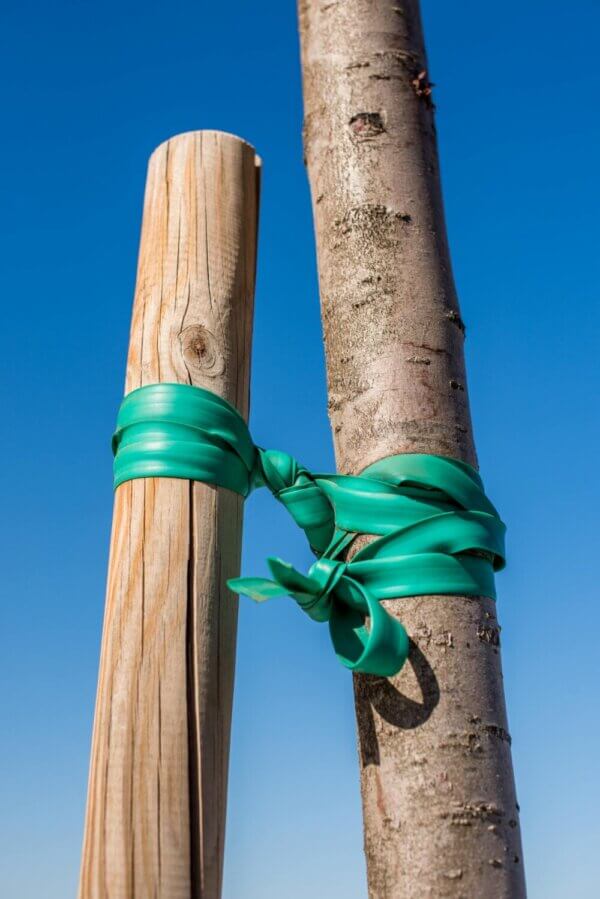
How And When To Stake A Tree
Staking a tree is not always necessary. In fact, staking a tree incorrectly or for too long can do more harm than good. You should stake a tree only when it truly needs extra support. Here’s when staking is appropriate:
The tree has a weak or bare root system. This is often true for container grown or bare root trees.
The site is very windy or exposed. Staking prevents young trees from bending or breaking.
The tree is top heavy. The trunk is too spindly for the amount of foliage.
The tree is leaning after planting.
The soil is unusually loose.
How to stake a tree:
Step 1: Place the Stakes
- Insert two stakes on opposite sides of the tree, about 18 inches from the trunk.
- Stakes should be outside the root ball, angled slightly away from the tree.
- For windy areas, add a third stake in a triangle around the trunk
Step 2: Attach the Tree Ties
- Use soft, flat tree straps or wide cloth. Do not use rope or wire, it will damage the trunk.
- Tie around the lower third of the tree’s trunk.
- Wrap the tie loosely, allowing the tree to sway slightly in the wind (this helps develop strong roots).
Step 3: Secure to the Stakes
- Tie each end of the strap to the stakes, adjusting the tension so the tree is upright but not rigid.
- Check that the ties are not digging into the bark
Remove the stakes after one growing season. If left too long the tree will not develop a strong root system.