
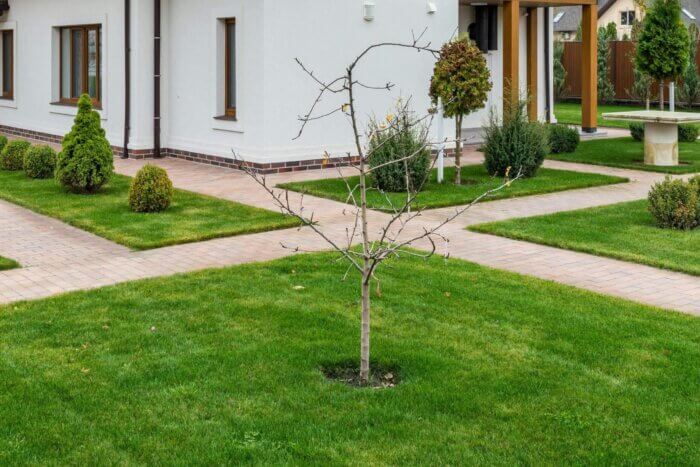
Top Reasons Why Your New Tree Didn’t Survive
Planting a new tree is exciting, but disappointment can quickly follow when a tree fails to thrive. Many factors can contribute to a tree’s demise shortly after planting. This article explores the top reasons why your new tree didn’t survive.
1. Overwatering or Underwatering
Watering is crucial for the survival of newly planted trees, yet many fail due to flawed watering practices. Too little water can lead to dehydration, while too much can cause root rot, particularly in clayey soils. It’s important to monitor soil moisture levels and adjust watering accordingly. Improper watering is the number one reason why newly planted trees die.
Fix: Check soil moisture often. Water deeply, but only when the soil 2–3 inches down feels dry. More information about watering properly.
2. Poor Planting Technique
Improper planting is another leading cause of tree mortality. Trees planted too deep, too shallow, or with roots still wrapped in burlap or circling in a container can’t establish properly.
Fix: Dig a wide, shallow hole. Remove all packaging. Loosen roots before planting. Make sure the root flare (where trunk meets roots) is at ground level. More information about proper planting technique.
3. Improper Mulching
Mulching is beneficial, but when done incorrectly, it harms the tree. Piling mulch directly against the trunk creates a moist environment perfect for harmful fungi and pests. This can also lead to stem-girdling roots, which choke off the flow of water and nutrients.
Fix: Spread mulch in a wide, flat ring 2–4 inches deep. Keep it a few inches away from the trunk. More information about mulching.
4. Mechanical Damage/Damage From Rabbits Or Deer
Trunk damage can significantly impact a tree’s survival. Rabbits and deer can harm the trunk by chewing the bark, disrupting the nutrient flow. Similarly, equipment like lawnmowers or trimmers can inflict wounds. If the tree has a band of bark removed all the way around the tree, it will die.
Fix: Use mulch rings to protect the tree from mowers and trimmers. Use fencing or tree guards to prevent damage from rabbits or deer.
5. Wrong tree or location
Choosing the right tree and location is vital for success. Every tree species has specific requirements, such as soil nutrients, sunlight, and space, which must be met.
Fix: Researching the growth characteristics and needs of your chosen tree species will help in selecting a location that supports optimal root pressure and health.
By planting carefully and giving your new tree the right start, you’ll help it thrive for decades to come.