
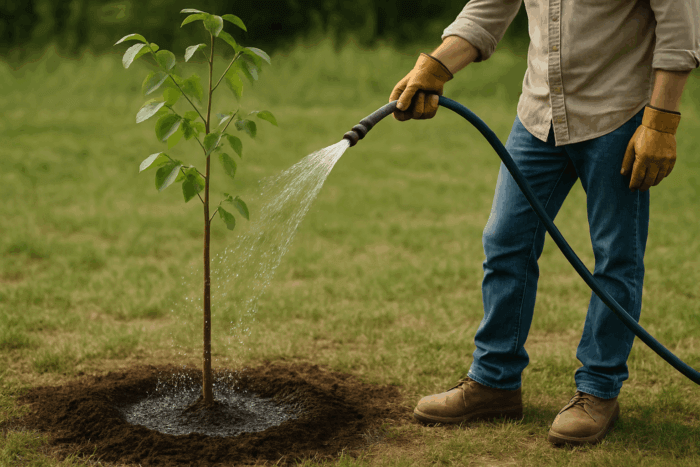
Underwatering is the #1 reason why newly planted trees die.
Among all the factors that influence the survival of newly planted trees, inadequate watering remains the most common cause of failure. This is particularly true during the first two to three years after planting, when a young tree is still establishing its root system.
The early stages of a tree’s life in a new location are marked by limited root spread and heightened water demand. Without an established network of roots, the tree is unable to efficiently draw water from the surrounding soil. In this vulnerable period, it depends entirely on the moisture available within the original root ball and the immediate surrounding soil. If the soil dries out, even briefly, the tree may experience stress that slows growth or leads to dieback. If water is consistently insufficient, the tree is unlikely to survive.
Although watering schedules can be used as a helpful reference, the best approach is to check the soil directly before adding water. This is because weather conditions such as heat, wind, or rainfall can quickly alter how much water a tree needs. For example, a newly planted tree might require water every other day during a period of drought or high temperatures, but only once per week in cooler or rainy weather. A good way to test the soil is by inserting a long screwdriver or metal rod several inches into the root zone. If the tool slides in easily and comes out with damp soil clinging to it, the tree has adequate moisture. If it is difficult to push the tool into the ground, or if the tool comes out clean and dry, the soil is lacking water.
When irrigation is necessary, the goal should be to moisten the soil to a depth of 8-12 inches , which corresponds to the active root zone. This can be done by placing a hose at the base of the tree and allowing it to run slowly for an extended period of time. Soaker hoses, watering bags, or drip systems can also be used to deliver water gradually and effectively. Shallow watering is discouraged, as it encourages surface rooting and exposes the tree to drought stress. By contrast, deep watering promotes downward root growth, improving long-term stability and resilience.
It is also worth noting that mulch plays a vital role in maintaining consistent soil moisture. A layer of organic mulch two to four inches thick, placed around the base of the tree but kept a few inches away from the trunk, helps prevent evaporation and protects the roots from temperature extremes.
Failing to provide adequate water in the first years after planting can have long term consequences. A tree stressed by drought early in life may develop poor structure, suffer from disease susceptibility, or experience stunted growth. In severe cases, the tree may not survive the summer. Conversely, trees that receive proper care in the establishment phase are more likely to thrive in the long term, requiring less attention and demonstrating greater resilience.
The guidelines listed below should be used as a reference point. The best method is to check the soil directly.
Newly Planted Tree
Less Than 2 Inch Caliper
Caliper refers to the diameter (width) of the tree trunk 12 inches above the ground.
- First 2 weeks: Water every day
- Weeks 3–8: Water every other day
- Weeks 9 and thereafter: Water weekly until established.
More Than 2 Inch Caliper
- Weeks 1-4: Water every day
- Weeks 3–12: Water every other day
- Weeks 13 and thereafter: Water weekly until established.
How Much:
- Apply 1–1.5 gallons per inch of trunk diameter at each watering.
- Ensure the soil is moist 8–12 inches deep.
- Use a slow soak method (soaker hose, tree watering bag, or a garden hose set on low for 20–30 minutes).
Pro Tips:
Newly planted trees should be watered at base of the trunk. Use mulch (2–4 inches thick) to conserve moisture, but keep mulch away from the trunk.
Young (Established) Tree
Young trees (1–3 years old) are still building their root systems. Inconsistent watering can lead to poor growth and increased vulnerability.
How Often:
- Every 7–10 days during the growing season (spring through fall).
- More frequently in hot, dry, or windy conditions.
How Much:
- Use the 10-gallon rule: 10 gallons per inch of trunk diameter per week.
- Water should soak to a depth of 12–18 inches to reach most of the roots.
Pro Tips:
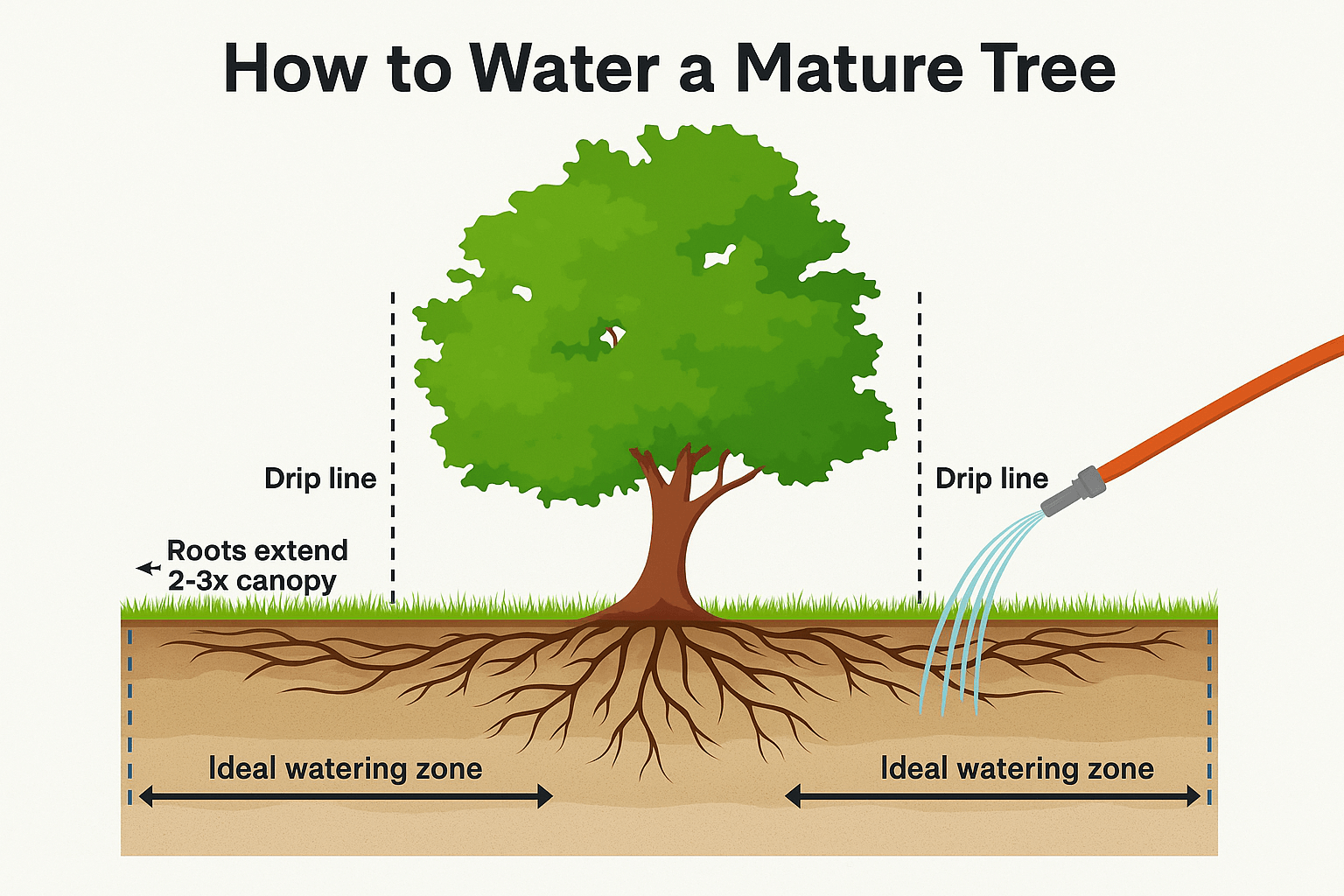
- Focus watering at the root ball and near the drip line (the edge of the canopy), where roots are actively growing.
- Avoid shallow, frequent watering. It encourages surface roots and weakens the tree.
- If the very top of your tree has dead twigs or brown leaves but the rest of the tree looks fine, your tree is not getting enough water. This is one of the first signs of drought stress.
Mature Tree
Mature trees (3+ years) can withstand longer dry periods but still benefit from deep watering during droughts or extreme heat.
How Often:
- Every 2–4 weeks during dry spells or hot summer months.
How Much:
- Water should reach 18–24 inches deep.
- Apply 1–2 inches of water over the entire root zone (drip line and beyond).
Pro Tips:
- Use a soaker hose or deep-root watering tool to avoid runoff and ensure saturation.
- Mature trees often have roots extending 2–3 times beyond the canopy, so water wide, not just close to the trunk. Do not use a watering bag as there are no absorption roots at the base of the tree.
General Watering Tips
- Adjust frequency based on soil type: clay holds water longer; sand dries faster.
- Keep track of rainfall. A rain gauge helps you know if nature did the job for you.